
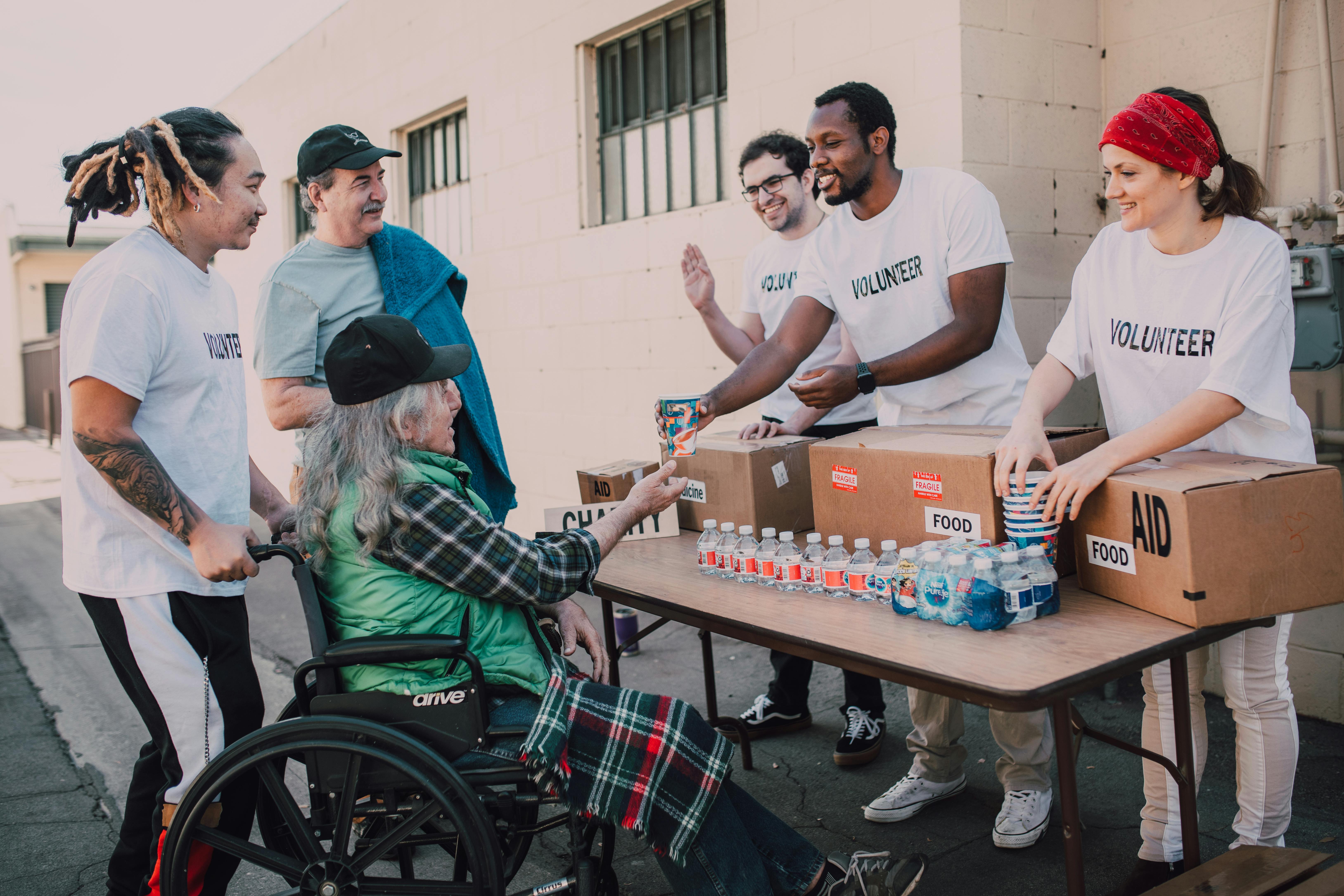
Food assistance organizations receive most of their attention and donations during a few weeks each year. Their demand does not follow that pattern, and the mismatch shapes everything they do.
Demand is steady while giving is seasonal
Household food need persists across the calendar and rises when utility bills climb, school meals pause over summer, or hours are cut at seasonal jobs.
Donations concentrate around the holidays, which means storage is strained at one point in the year and shelves thin at another.
Organizations therefore prioritize recurring financial support over one-time drives, because predictable income lets them buy what is needed when it is needed.
Money purchases more than donated goods
Food banks buy through wholesale channels and salvage arrangements at prices well below retail, so a dollar donated converts into more food than a dollar spent at a store.
Donated goods also require sorting, date checking and disposal of unusable items, which consumes volunteer hours that could go to distribution.
This is why organizations often ask for funds rather than cans, a request that is sometimes read as ingratitude when it is an efficiency statement.
Cold chain capacity limits what can be offered
Fresh produce, dairy and protein require refrigeration from donation through distribution, and that capacity is expensive to build and to run.
Without it, the offering shifts toward shelf-stable items, which restricts nutritional range regardless of what the organization would prefer to provide.
Refrigerated trucks, walk-in units and backup power are therefore among the most consequential investments a pantry can make.
Distribution design determines who actually comes
Hours matter enormously. A pantry open only on weekday mornings is unavailable to anyone working a standard shift, which excludes many of the households it exists to serve.
Documentation requirements, intake questions and queuing in public view all raise the social cost of asking for help and reduce uptake.
Client-choice models, where people select their own items rather than receiving a fixed box, reduce waste and treat recipients as ordinary shoppers.
Volunteers need structure more than enthusiasm
Reliable weekly volunteers are more valuable than large groups arriving once, because training time is fixed and repeated tasks get faster with practice.
Roles requiring continuity, such as intake, scheduling and inventory, are difficult to staff with rotating help and are often where organizations are thinnest.
Anyone wanting to help usefully can ask what the organization is short of, which is frequently a recurring shift or a specific skill rather than more food.